What the Forestminds® method actually is.
Forestminds® is a Finnish, structured method for guided time in nature. Unlike a generic forest walk or an unguided Shinrin-yoku session, it follows a defined sequence of facilitated exercises — sensory orientation, slow walking, attention practices and group reflection — with a set duration and a clear role for the facilitator.
Our founder is certified in the method through the pioneering programme run by the ISA Centre for Applied Ecology and the Society of Forest Sciences, in partnership with NatureMinded. We combine that structure with the Japanese Shinrin-yoku tradition and adapt it to a corporate context: team objectives, working schedules, and pre/post measurement.
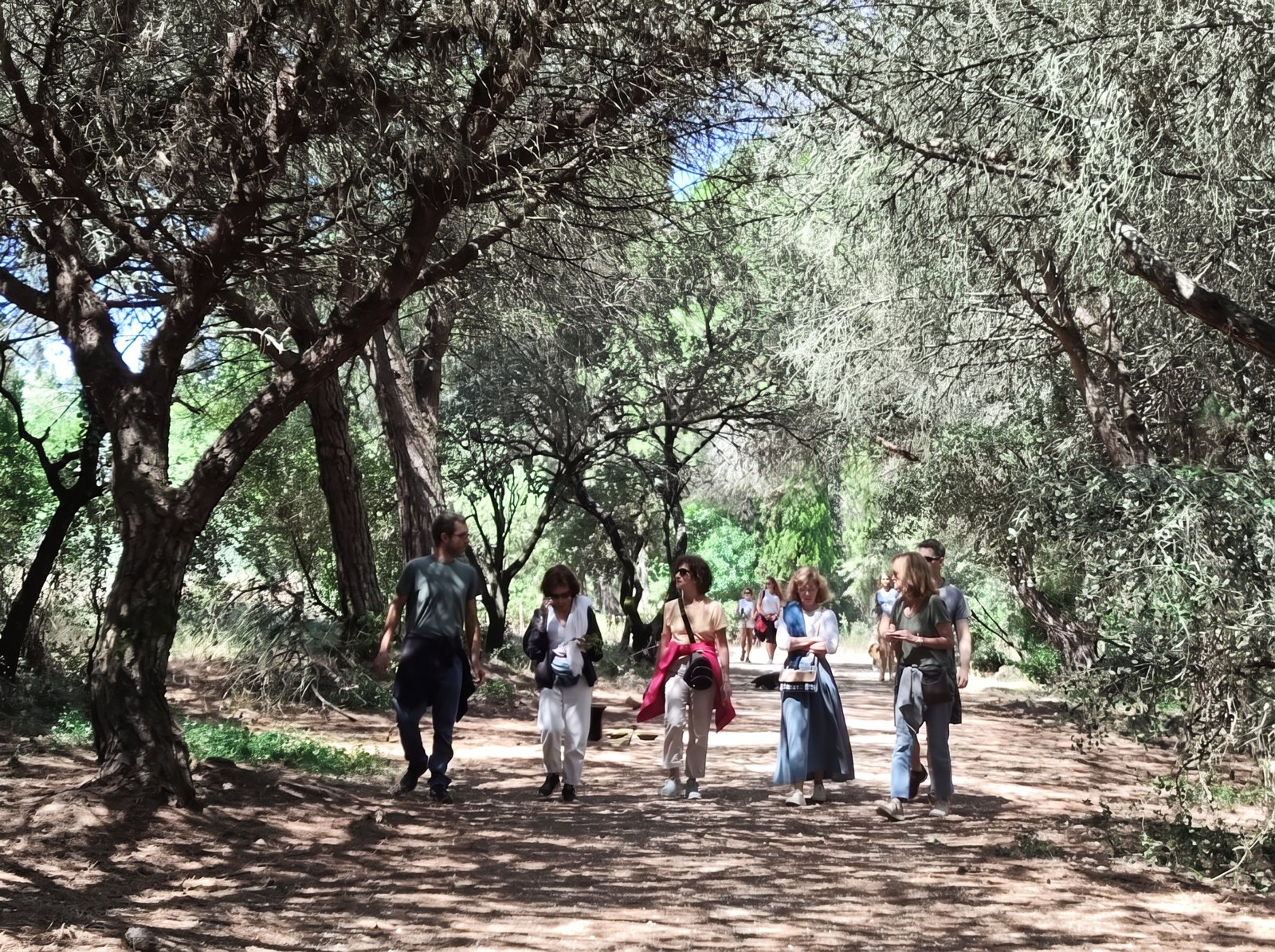
How it differs from a generic forest walk
- Generic forest walkForestminds® program
- Improvised route and contentDefined sequence of facilitated exercises
- One-off eventProgram with objectives agreed with HR
- No measurementPerceived stress measured before and after
- Recreational framingFramed around workplace outcomes and ESG reporting
Diagnosis
A short intake with HR or the team lead: current pressures, objectives, group size, constraints.
Program design
Format, duration, location and session sequence defined for that specific team.
Guided delivery
Structured Forestminds® and Shinrin-yoku sessions, facilitated by a certified guide.
Measurement & report
Perceived stress and wellbeing captured before and after, returned as a report for HR or ESG use.
What you can actually report back to the business.
Every program produces data. We measure what changed, for whom, and over which period — instead of asking you to take wellbeing on faith.
Perceived stress
Measured with a self-reported scale before and after each session. The change for your team is reported to you — we don't publish generic percentages we didn't measure.
Burnout risk signals
Early indicators surfaced at team level, aggregated and anonymous, so HR can act before absence or exit.
Team cohesion
Self-reported trust and communication quality within the team, tracked across the program.
Focus and mental fatigue
Recovery of directed attention after intensive work periods, reported by participants.
Participation and adherence
Attendance and repeat participation rates — the practical test of whether a wellbeing program is used at all.
ESG human-sustainability evidence
Documented interventions and outcome data you can cite in social and human-capital reporting.
We do not publish client statistics, testimonials or case results that we have not measured and been authorised to share.
The measurement layer behind every program.
Analytics is our own platform for turning a wellbeing session into data. It is included in corporate programs — not an add-on.
- 01
Before the session
Participants answer a short self-report scale on perceived stress and wellbeing, on their phone, anonymously.
- 02
After the session
The same scale is answered again, capturing the immediate change.
- 03
Across the program
Repeated measurements show the trend across sessions, not just a single moment.
- 04
The output
An aggregated team-level report — never individual data — that HR and ESG teams can use internally.
The scale is self-reported and perceptual. We do not collect physiological data such as cortisol or heart-rate variability, and we do not report individual responses.
Try Analytics
A credible alternative to conventional wellness programs.
Most corporate wellbeing offers are one-off events with no protocol and no evidence of impact. We work the other way around: defined method, trained facilitation, measurement, and a report you can defend internally.
- Structured
- A defined protocol, not an improvised outdoor activity.
- Science-based
- Built on published research on nature exposure, attention and stress recovery.
- Measured
- Pre/post data on every session, reported at team level.
- ESG-ready
- Documentation designed to feed human-sustainability reporting.